You Just Got the Keys. Now Your AC Has Questions.
 You finally own a home. Congratulations — seriously. But right about now, you might be standing in front of an aging AC unit wondering, what do I actually do with this thing?
Sound familiar?
Here’s the thing: most new homeowners have no idea what size or type of air conditioning system their home needs. And that’s completely normal. It’s not something anyone teaches you. You just get handed a house and a list of things that could go wrong.
The good news? Getting your air conditioning right from the start saves you money, stress, and a lot of sweaty summer nights. This guide will walk you through exactly what you need to know — no HVAC jargon, no upselling, just honest answers.
Why Your Neighbor’s AC Might Be All Wrong for You
It’s tempting to just copy what the previous owners had or ask your neighbor what they bought. Don’t.
Every home is different. Square footage matters, but so does ceiling height, insulation quality, the number of windows, and which direction your house faces. A 1,500-square-foot ranch-style home in Cedar Rapids needs a completely different system than a two-story of the same size with a finished basement.
The technical term for calculating the right size is a Manual J load calculation. A qualified technician runs this before recommending any system. If someone tries to sell you an AC unit without doing this first? Walk away.
Learn more about proper AC installation and what it involves.
Central Air vs. Other Options — What’s the Difference?
This is where a lot of first-time buyers get confused. Let’s break it down simply.
Central Air Conditioning
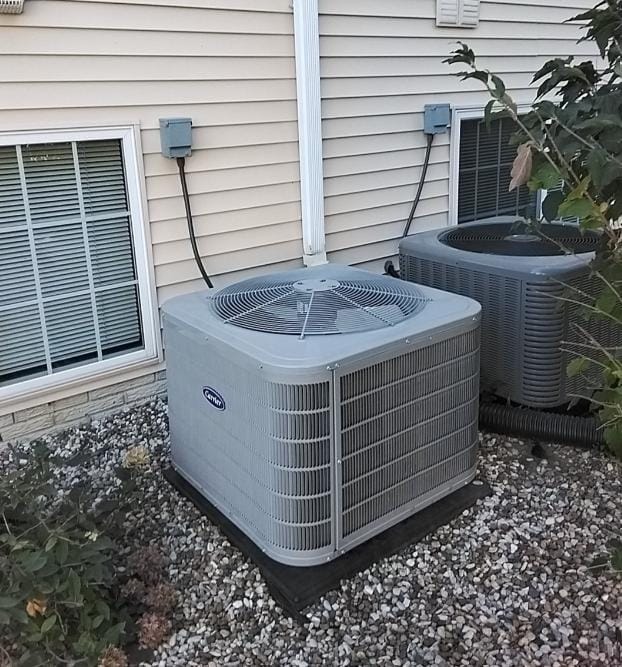
This is what most single-family homes in the Midwest use. A central system has an outdoor unit (the condenser) and an indoor unit (the air handler or furnace with a coil). Cool air travels through your existing ductwork to every room.
It’s the most efficient choice if your home already has ducts. It’s also the most common system Novak installs for Cedar Rapids homeowners.
Ductless Mini-Splits
No ducts? No problem. A ductless system mounts directly to a wall and cools individual rooms or zones. They’re great for additions, older homes, or spaces that never got connected to the main duct system.
They cost more upfront, but the installation is faster and the zone control can save you money long-term. You only cool the rooms you’re actually using.
Window Units and Portable ACs
These are temporary solutions — not home solutions. They’re fine for a rental or a single room in a pinch, but they’re not efficient enough for a whole house and they drive up your electric bill fast.
Explore the full range of air conditioning systems we carry.
The Sizing Question: Bigger Is Not Better
This surprises almost everyone. You’d think a bigger AC unit means a cooler house. But it doesn’t work that way.
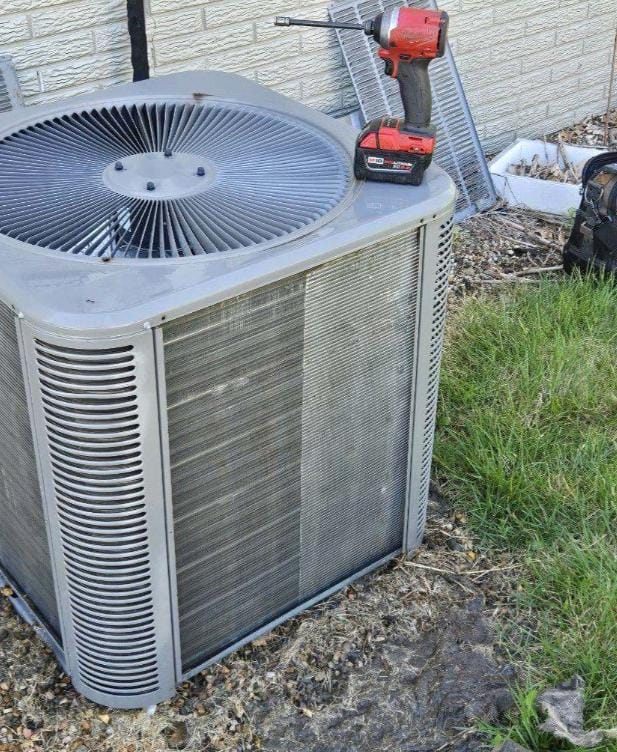
An oversized unit cools the air too fast. It shuts off before it can remove the humidity, which makes your home feel clammy and uncomfortable even when the temperature is technically correct. It also cycles on and off more frequently, which wears out the system faster.
An undersized unit runs constantly and can’t keep up on a hot Iowa July afternoon. Your electric bill spikes and the system burns out early.
The goal is a unit sized exactly right for your home — not a little bigger “just to be safe.”
| AC Unit Size (Tons) | Approximate Square Footage | Notes |
| 1.5 tons | 600–900 sq ft | Small homes, condos |
| 2 tons | 900–1,200 sq ft | Average ranch-style homes |
| 2.5 tons | 1,200–1,500 sq ft | Mid-size homes |
| 3 tons | 1,500–1,800 sq ft | Larger homes, may vary |
| 3.5–5 tons | 1,800–2,500+ sq ft | Larger or two-story homes |
 Important: These ranges are starting points only. A Manual J calculation accounts for insulation, windows, local climate, and more. Never let anyone size your system by square footage alone.
SEER Ratings — What They Mean for Your Wallet
SEER stands for Seasonal Energy Efficiency Ratio. The higher the number, the more efficient the unit. More efficiency means lower monthly electric bills.
Current federal standards require a minimum SEER2 of 14.3 in the North Central U.S. (that’s us). Most quality systems today run between 16 and 22 SEER.
Here’s the honest answer on whether to buy the highest SEER possible: not always. A high-efficiency unit costs more upfront. The payback period — meaning how long it takes to recoup that cost in energy savings — depends on how often you run your AC, your current electricity rates, and how long you plan to stay in the home.
A trustworthy contractor will walk you through the math. At Novak, we give you that breakdown before you spend a dollar. No surprises.
See current financing options and available Carrier rebates.
What First-Time Buyers Get Wrong Most Often
It’s frustrating to buy the wrong system and find out two years later. Here are the most common mistakes — and how to avoid them.
Skipping the load calculation. We covered this, but it’s worth repeating. This is the single most important step and the one most commonly skipped by contractors trying to close fast.
Choosing price over efficiency. The cheapest system is rarely the cheapest to own. Factor in operating costs, not just purchase price.
Ignoring the ductwork. If your ducts are old, leaky, or undersized, even a brand-new AC unit won’t perform well. A duct inspection should be part of any new system evaluation.
Not asking about warranties. Manufacturer warranties and contractor labor warranties are different things. Know what’s covered and for how long. Carrier systems installed by a factory-authorized dealer like Novak come with some of the strongest warranty protection available.
Skipping the maintenance plan. A new AC system is an investment. Annual tune-ups extend its life and keep your warranty valid. Ask about a Worry Free Maintenance plan before your first summer rolls around.
Why Your Contractor Choice Matters More Than Your System Choice
Look — you can buy the best air conditioning unit on the market. But if it’s sized wrong, installed incorrectly, or connected to faulty ductwork, it won’t perform. You’ll still be sweating in July and wondering what went wrong.
The contractor you choose is the most important decision you’ll make.
Novak Heating, Air & Duct Cleaning has been Cedar Rapids’ trusted name in HVAC since 1934. That’s more than 90 years of Iowa summers. They’re the only Carrier factory-authorized dealer in Cedar Rapids — and have been for over 80 years. That credential exists to protect you: it means technicians are trained, certified, and held to standards the manufacturer stands behind.
For new homeowners especially, starting with a contractor you won’t have to replace is worth more than you might think.
Frequently Asked Questions
How do I know if my existing AC system needs to be replaced or just repaired?
A system under 10 years old that needs a single repair is almost always worth fixing. A system over 15 years old with a compressor failure or refrigerant leak is usually at the end of its life — repair costs can approach or exceed replacement value. A good contractor will tell you the honest answer. At Novak, that comes with a one-year repair warranty and upfront pricing so you can make the call yourself with full information.
What’s the difference between a Carrier system and a generic brand?
Carrier is one of the most tested, most reliable HVAC brands in the industry. Factory-authorized dealers like Novak are required to maintain specific training certifications and installation standards. That means the unit is installed correctly, the warranty is fully protected, and you have a local contractor backed by the manufacturer if anything ever goes wrong.
Do I need to replace my furnace when I install a new air conditioner?
Not always — but often it makes sense. Central AC systems share the indoor air handler with your furnace. If your furnace is also aging, installing both at the same time can save on labor costs and ensures both systems work together efficiently. A technician can assess your furnace condition during the AC evaluation.
How long should a new air conditioning system last?
A properly sized, correctly installed, and regularly maintained central AC system typically lasts 15 to 20 years in the Midwest. Skipping annual maintenance, running a system that’s oversized or undersized, or poor original installation can cut that lifespan significantly.
The Right AC System Is Out There — Here’s Your Next Move
You don’t have to figure this out alone. The best first step is a home evaluation with a technician who will actually measure, calculate, and give you honest options — not just quote you the most expensive unit on the truck.
Novak has been doing exactly that for Cedar Rapids families since before most of Cedar Rapids’ neighborhoods existed. Three generations of homeowners have made the same call. You can too.
Schedule your air conditioning consultation with Novak today. You’ll know the price before anyone touches a thing — and if you find the same quality for less elsewhere, they’ll beat it by $100.
That’s not a sales pitch. That’s a promise they put in writing.