Why Is Your Gas Bill Bigger Than Your Grocery Bill?
 You open the January gas bill. Your stomach drops.
You didn’t crank the heat. You wore a sweater. You even yelled at the kids for leaving the back door open. So why does the number keep climbing?
Here’s the thing: a lot of that money isn’t heating your home. It’s leaking out of a furnace that’s working harder than it should. A dirty filter, a weak flame sensor, or a blower motor that’s slowly wearing out can all quietly eat your budget.
The good news? Most of that waste is fixable. In this guide, you’ll learn what real furnace maintenance includes, which problems hit your bill hardest, what you can handle yourself, and when it’s time to call a pro. No jargon. No scare tactics. Just what actually moves the needle.
The Hidden “Furnace Tax” on Your Winter Budget
Think of your furnace like a car. Skip oil changes for a few years and it still runs — until it doesn’t. And while it’s running, it burns more fuel to do the same job.
Furnaces work the same way. Small problems stack up, and each one asks the burner to run a little longer to hit the temperature on your thermostat. Longer run times mean more gas. More gas means a bigger bill.
Why Iowa Winters Make It Worse
In the Cedar Rapids area, temperatures can drop to −20°F. On those nights, your furnace may run almost nonstop. A system that’s 10% less efficient in mild weather feels like a 10% problem. In a deep freeze, it’s the same 10% stacked on top of far more run time.
That’s why households in Marion, Hiawatha, and Robins often see their worst bills during January and February cold snaps. The furnace isn’t just working. It’s working overtime with a handicap.
What Real Furnace Maintenance Actually Includes
Sound familiar? A guy shows up, swaps the filter, glances at the burner, and leaves in 15 minutes. That’s not maintenance. That’s a drive-by.
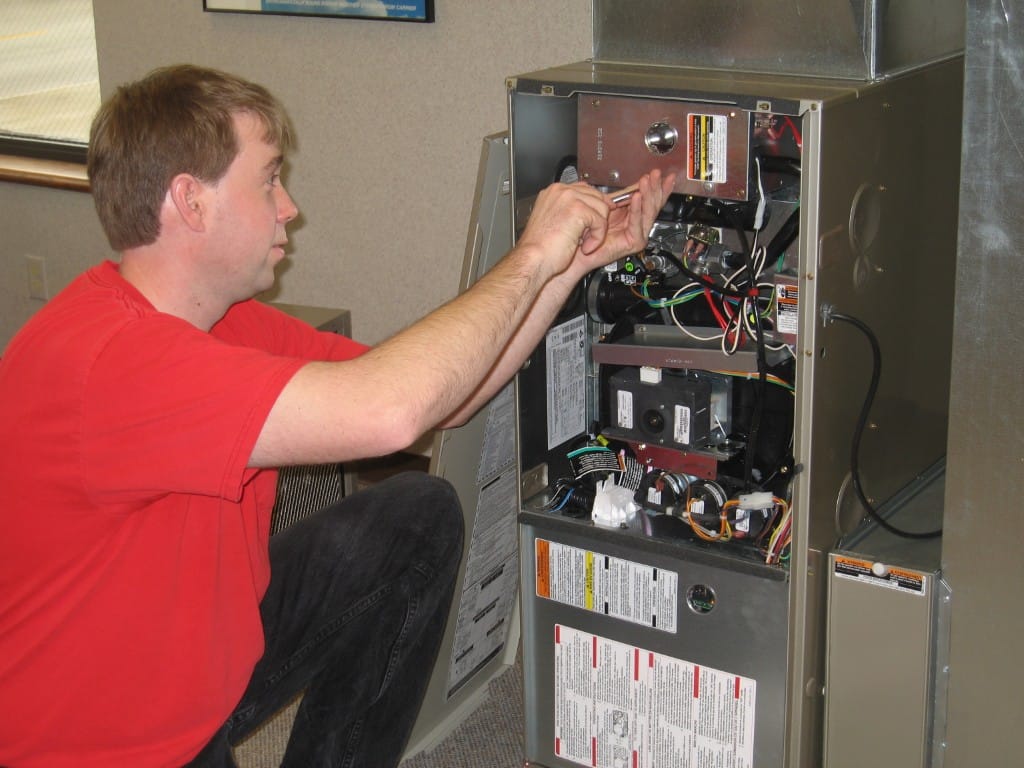
A real tune-up is a careful inspection that checks safety, airflow, and combustion. Each piece affects how much gas you burn. Here’s how the main tasks connect to your wallet.
Maintenance Task | What It Fixes | How It Affects Your Gas Bill | DIY or Pro? |
Air filter replacement | Clogged airflow | Restricted air makes the furnace run longer per cycle | DIY |
Flame sensor cleaning | Burner shutting off early | Stops wasteful short cycling and repeated restarts | Pro |
Burner inspection and cleaning | Uneven, weak flame | Helps fuel burn completely instead of wasting it | Pro |
Gas pressure check | Pressure set too high or low | Wrong pressure wastes fuel or causes poor heat | Pro |
Temperature rise test | Heat exchanger and airflow issues | Confirms the heat you pay for reaches your rooms | Pro |
Blower motor and wheel cleaning | Dust-caked blower | A clean blower moves more air with less effort | Pro |
Thermostat calibration | Wrong temperature readings | Prevents overheating your home by a few degrees | Pro or DIY |
Carbon monoxide and venting check | Blocked or leaky flue | Safety first, but blocked vents also hurt efficiency | Pro |
Look closely at that list. Only one or two items are true DIY jobs. The rest need gauges, meters, and training.
The Temperature Rise Test Most People Never Hear About
Want to know the secret most homeowners miss? Every furnace has a “temperature rise” range printed on its label. It’s the difference between the air going into the furnace and the air coming out.
If the rise is too high, airflow is choked. If it’s too low, the burner may not be firing right. Either way, you’re paying for heat that never reaches your living room. A good technician measures this every single visit. If yours doesn’t, ask why.
Small Problems That Cost You Big
Let’s get specific. These are the issues we see over and over in Corridor homes, and each one quietly drains your account.
The $10 Filter That Costs You Hundreds
A clogged filter is the most common efficiency killer. Your blower has to fight to pull air through it. The furnace runs longer, the heat exchanger runs hotter, and the whole system wears faster.
It’s frustrating when the fix is this cheap and nobody told you. Check your filter every month during heating season. Most 1-inch filters need replacing every one to three months. Thicker media filters can last longer.
The exception is homes with pets, recent remodeling, or heavy dust. Those filters may clog in just a few weeks.
Short Cycling: Death by a Thousand Restarts
Does your furnace kick on, run for a minute or two, then shut off? Then start again a few minutes later? That’s short cycling.
Every startup burns extra fuel before the system reaches steady heat. It’s like driving in stop-and-go traffic instead of cruising on the highway. A dirty flame sensor is a frequent cause, and it’s a quick fix for a trained tech.
The Slow Creep of a Tired Blower
Blower motors don’t usually die overnight. They get dusty, bearings wear, and they slowly lose power. You might notice weak airflow from vents or rooms that never quite feel warm.
So what do people do? They bump the thermostat up a few degrees. And that’s where the bill really starts to climb.
What You Can Do Yourself (and What You Shouldn’t)
Look, we get it. When money’s tight, doing it yourself feels smart. And some tasks really are yours to own.
You can change your filter on schedule. You can keep the area around your furnace clear of boxes, laundry, and paint cans. You can make sure supply and return vents aren’t blocked by furniture or rugs. You can also check that your outdoor vent pipes aren’t buried under snow after a storm.
But here’s what matters. Anything involving gas lines, burners, electrical parts, or the heat exchanger belongs to a licensed professional. This isn’t about protecting our business. It’s about protecting your family.
A cracked heat exchanger can leak carbon monoxide, which you can’t see or smell. Gas pressure adjustments done wrong can create real hazards. If you’re not sure, stop. Make the call.
A Quick Word on Thermostat Habits
Lowering the temperature a few degrees while you sleep can trim your bill without a single repair. This doesn’t work if your furnace is struggling, though. A sick system may take so long to recover that the savings disappear.
Repair, Tune, or Replace? An Honest Look
You might feel overwhelmed by this question. Maybe a salesperson already told you that you “need a new system.” Maybe you’re scared to ask because you can’t afford the answer.
Take a breath. Many furnaces with problems don’t need replacing. A good tune-up or a targeted furnace repair can buy you years of reliable, efficient heat.
That said, there’s a point where repairs stop making sense. Here’s a simple way to think about it.
Situation | Usual Best Move | Why |
Under 12 years old, maintained, no major failures | Tune-up and minor repairs | Plenty of life left; efficiency can be restored |
12–15 years old, occasional repairs | Repair and plan ahead | Fix what’s broken, start budgeting for the future |
15+ years old, frequent breakdowns, rising bills | Get a replacement quote | Repair costs and wasted fuel add up fast |
Cracked heat exchanger | Replace | A serious safety issue that usually isn’t worth repairing |
At Novak Heating & Cooling, we follow a simple rule: if your furnace has good years left, we’ll tell you to fix it, not replace it. And when replacement truly makes sense, we’ll walk you through your furnace installation options with upfront pricing, plus any available rebates and financing.
Why Brand Knowledge Matters More Than You Think
Here’s something most articles on furnace maintenance skip. The technician’s familiarity with your specific equipment changes the quality of the tune-up.
Every manufacturer designs its control boards, inducer motors, and safety switches a little differently. A tech who works on a dozen brands has to be decent at all of them. A tech who lives inside one brand knows its quirks, its common failure points, and its factory specs by heart.
That’s why Novak Heating & Cooling focuses on Carrier. As the area’s Carrier factory authorized dealer and a Carrier President’s Award winner, our team has deep, hands-on knowledge of these systems. We still service other brands, but that focus means fewer guesses and faster fixes.
One more thing worth knowing: many manufacturer warranties expect proper care. Keep records of every tune-up. If a part ever fails under warranty, that paper trail can save you a headache.
Making Maintenance Automatic (So You Never Forget)
When was your last tune-up? If you have to think about it, it’s probably been too long. Fall turns into winter before you blink, and suddenly it’s the first cold night and everyone calls at once.
A maintenance plan fixes that problem. With the Worry-Free Maintenance plan from Novak Heating & Cooling, you get scheduled visits, reminders, and priority service. You stop thinking about your furnace. We do the thinking for you.
What a relief, right? No more guessing whether this is the year it gives out.
When Things Go Wrong Anyway
Even well-maintained furnaces can fail. A power surge, an ice storm, or simple bad luck can knock out your heat. If that happens at 2 a.m. in January, our 24-hour emergency heating service is there. You’ll get the price before the work starts. No surprises.
Frequently Asked Questions
How often should I get furnace maintenance?
Once a year is the standard, ideally in early fall before the heating season starts. In the Cedar Rapids area, September through early November is the sweet spot. You’ll beat the rush and catch problems before the first cold snap.
Can furnace maintenance really lower my gas bill?
Yes, when your system has fixable efficiency problems. Clogged filters, dirty flame sensors, poor airflow, and incorrect gas pressure all make your furnace burn more fuel than needed. A thorough tune-up corrects those issues. The savings depend on how neglected the system was and how cold your winter gets.
What’s the difference between a furnace tune-up and a furnace inspection?
An inspection looks for problems. A tune-up finds them and fixes the small ones on the spot, like cleaning the flame sensor, adjusting gas pressure, and cleaning the blower. A quality furnace tune-up service should always include a safety inspection, including a carbon monoxide check.
Is furnace maintenance worth it on an older furnace?
Usually, yes. Older furnaces benefit the most because they’ve had more time to build up dust, wear, and drift out of spec. Maintenance also gives you an honest read on how many years the system has left. That lets you budget for replacement on your terms instead of during an emergency.
 Warmer Home, Lighter Bill: Your Next Move
 Warmer Home, Lighter Bill: Your Next Move
Let’s bring it home. High winter gas bills aren’t always about the weather or the utility company. Often, they’re about a furnace that’s quietly wasting fuel because nobody’s looked under the hood in a while.
Change your filter monthly. Keep vents clear. Watch for short cycling and weak airflow. And get a professional tune-up every fall, because the tasks that save the most money are the ones that need real tools and training.
For over 90 years, the Novak family has put its name on every job across Cedar Rapids, Marion, Hiawatha, and Robins. Comfort, handled. Since 1934.
Ready to stop paying the furnace tax? Contact us or call (319) 364-4626 to schedule your tune-up today. Your January self will thank you.