Is Your Old Furnace Keeping a Secret?
 It’s 6 a.m. in January. The wind chill is somewhere south of −20°F, and your furnace kicks on with that familiar rumble. It’s been doing this for 17 years. So it’s fine, right?
Maybe. But here’s the thing. An old furnace doesn’t usually quit with a bang. It wears out quietly, from the inside, in a part you can’t see.
That part is the heat exchanger. When it cracks, the wall between your furnace’s flames and the air you breathe gets thinner. And carbon monoxide (CO) has no smell, no color, and no warning beyond the alarm on your wall.
If you own an older furnace, you might feel stuck. Replacing it is expensive. Ignoring it feels risky. This guide walks you through the middle path: smart furnace maintenance built for aging equipment. You’ll learn why cracks form, what a good tune-up should actually check, which warning signs you can spot yourself, and when repair stops making sense.
Why Older Furnaces Crack (It’s Not Just Age)
A heat exchanger is a set of metal chambers. Flames heat the inside. Your blower pushes house air across the outside. The exhaust goes up the flue, and the warm air goes to your rooms.
Every time the furnace runs, that metal heats up and expands. When it shuts off, the metal cools and shrinks. On a cold Iowa day, that can happen dozens of times. Over 15 or 20 winters? That’s tens of thousands of cycles.
Metal gets tired. Think of bending a paper clip back and forth. It holds for a while, and then it snaps.
The Hidden Accelerator: Choked Airflow
Look, age alone doesn’t crack most heat exchangers. Heat does. Too much of it.
When airflow is weak, the blower can’t carry heat away fast enough. The heat exchanger runs hotter than it was built to handle. A clogged filter, closed vents in unused rooms, a dirty blower wheel, or ductwork that was undersized from day one can all cause it.
Here’s what most homeowners never hear. Every furnace has a data plate listing its “temperature rise” range. That’s how much warmer the air leaving the furnace should be than the air going in. A good technician measures this during maintenance. If the rise sits above the range, the heat exchanger is being cooked a little every cycle. Fixing the airflow problem can add years to an old furnace’s life.
Sound familiar? That “I’ll change the filter next month” habit matters more on a 15-year-old furnace than on a new one.
What Real Furnace Maintenance Looks Like on an Older System
Not all tune-ups are equal. A quick filter swap and a “looks good” won’t protect you. On an aging furnace, maintenance should focus on the parts that fail with age and the problems that can hurt you.
At Novak Heating & Cooling, our technicians have been working on furnaces in Cedar Rapids–area homes since 1934. Here’s the thing we’ve learned over 90+ years: the older the furnace, the more the tune-up should look like a safety inspection.
The Checks That Matter Most
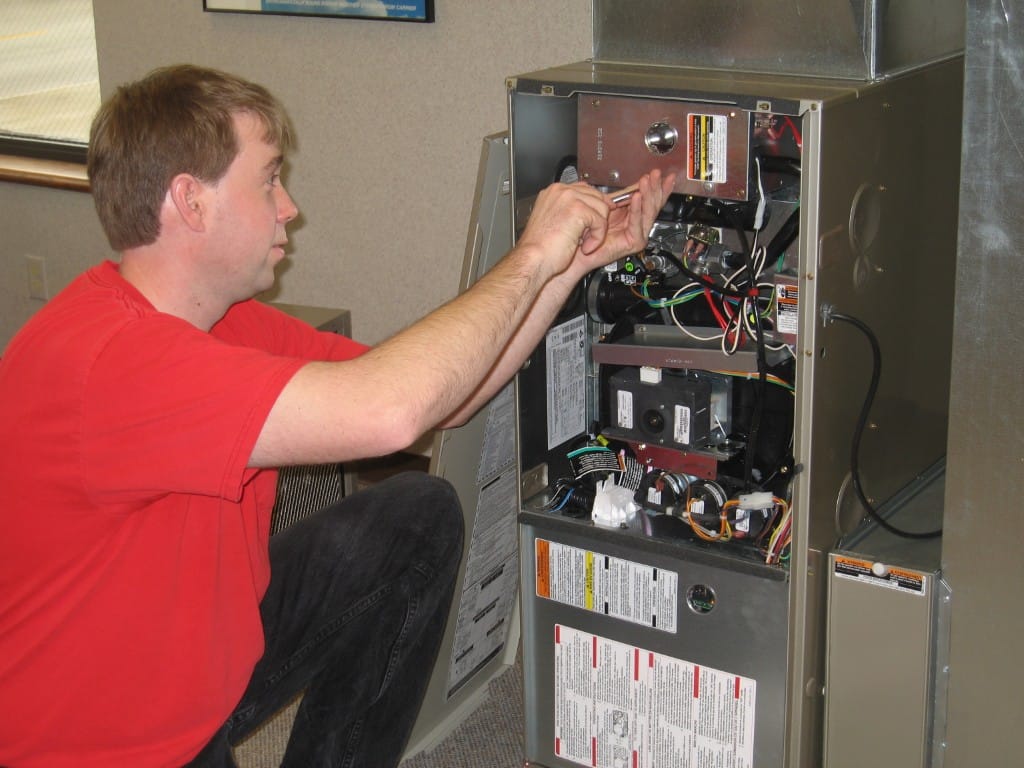
A proper furnace tune-up on an older system should include a close look at the heat exchanger. Many cracks hide where you can’t see them without a light or a camera. Your technician should also watch the burner flames before and after the blower starts. A flame that jumps, flickers, or bends when the blower kicks on can point to air leaking through a crack.
Combustion testing is another big one. A tech uses a meter to measure CO in the flue gas. It tells a story about how cleanly your furnace burns. The flue and venting matter too. Rust, gaps, or a blocked chimney can push exhaust back into your home, even with a healthy heat exchanger.
Safety switches deserve attention, especially the high-limit switch. If it trips a lot, the furnace is overheating. That’s a red flag for the heat exchanger.
Here’s how maintenance priorities shift as your furnace ages.
Furnace Age | Main Risk | What Maintenance Should Focus On | How Often |
0–7 years | Dirt, minor wear, warranty issues | Filter, burners, ignition, keeping warranty records | Once a year |
8–14 years | Overheating from airflow problems | Temperature rise, blower, ductwork, high-limit switch | Once a year, in early fall |
15–20 years | Metal fatigue and heat exchanger cracks | Heat exchanger inspection, combustion testing, flue check | Once a year, plus a check-in if anything changes |
20+ years | Cracks, venting failure, parts that are hard to find | Full safety inspection and an honest repair-vs-replace talk | Every fall, without skipping |
Warning Signs You Can Spot Yourself
 You don’t need tools to notice trouble. You just need to know what to watch for. And you’re in your home every day. Your tech isn’t.
Start with the flame, if your furnace has a viewing window. A healthy gas flame is mostly blue. A lazy yellow or orange flame can mean poor combustion. Next, look for soot. Black streaks around the burner area or on the furnace cabinet mean something isn’t burning right.
Then there’s the smell test. CO itself has no odor. But a burning or “exhaust” smell near the furnace still deserves a call.
Pay attention to how your family feels, too. Headaches, dizziness, nausea, or feeling tired at home, then better once you leave? That pattern matters. CO poisoning is often mistaken for the flu. The difference: the flu doesn’t get better when you go to work.
When to Act Right Now
If your CO alarm goes off, don’t troubleshoot. Get everyone outside, then call 911 or your gas utility from fresh air. Once the home is safe, call for 24-hour emergency heating service.
It’s scary. We know. But a working alarm doing its job is the system working exactly the way it should.
Your CO Alarm Is Part of Your Furnace Maintenance
Here’s what matters, and most people miss it. CO alarms expire. Most are built to last somewhere between 5 and 10 years, depending on the model. Many will chirp near the end of their life, but not all. Check the date printed on the back. If you can’t remember when you bought yours, it’s probably time.
You’ll want an alarm on every level of your home and outside each sleeping area. Put one near the furnace room too, but not right next to the furnace. A spot a few feet away avoids false alarms when the burners first light.
Test alarms monthly. It takes ten seconds. Pair it with your filter check and you’ve built a habit that protects your whole family.
Repair or Replace? An Honest Look
This is where many homeowners feel overwhelmed. You hear “cracked heat exchanger” and suddenly someone is quoting a brand-new system. Is that fair?
Sometimes yes. Sometimes no.
A confirmed crack is serious. In most cases, a furnace with a cracked heat exchanger should be shut down until it’s fixed. The exception is when the heat exchanger is still under warranty. Some manufacturers cover it for a long time, and replacing just that part can make sense on a younger furnace. On a 20-year-old unit, though, the cost of the part and labor often gets close to the cost of a new furnace. And you’d still have 20-year-old everything else.
Here’s a rough guide to help you think it through.
Situation | Usually Makes Sense To | Why |
Under 12 years, crack covered by warranty | Repair (replace heat exchanger) | Parts covered, rest of furnace has life left |
12–15 years, no crack, airflow issue found | Repair and fix airflow | Low cost, adds years, lowers crack risk |
15+ years, crack confirmed, no warranty | Replace | Repair cost is close to new, other parts are worn |
20+ years, frequent repairs | Plan replacement before winter | Avoids a no-heat emergency at −20°F |
But here’s the honest part. Ask to see the crack. A good technician will show you a photo or video, or walk you to the furnace and point at it. If someone won’t show you, get a second opinion. That’s not being difficult. That’s being smart with a big decision.
Why We Lead With “Repair First”
At Novak Heating & Cooling, we’d rather tell you your furnace has years left than sell you one you don’t need. If it’s fixable, we’ll say so. If it isn’t, we’ll show you why, give you an upfront price, and back the work with our workmanship and money-back guarantees.
If replacement does make sense, we’re the Corridor’s Carrier factory authorized dealer. That means one premium brand, installed and serviced by people who know it inside and out. You can learn more about our furnace installation process before you commit to anything.
The Easy Way to Never Skip a Tune-Up
Life gets busy. Fall sneaks up. Suddenly it’s November and the furnace hasn’t been checked in two years. It happens to everyone.
That’s why we built Worry Free Maintenance. Plan members get reminders, priority service, and a tune-up before the cold hits. On an older furnace, that yearly check is the difference between catching a crack early and finding it with your CO alarm.
Think of it like a dentist visit for your house. Nobody gets excited about it. But you feel relieved when it’s done.
Frequently Asked Questions
How often should an older furnace get maintenance?
Once a year, every year, ideally in early fall before heavy use. For furnaces 15 years and older, don’t skip a season. Call sooner if you notice odd smells, soot, frequent cycling, or a yellow flame.
Can furnace maintenance prevent a cracked heat exchanger?
It can’t stop metal from aging, but it can slow the damage a lot. The biggest win is catching airflow problems that cause overheating. A tech who measures temperature rise and fixes the cause can add years to a heat exchanger’s life.
Will a CO detector catch a cracked heat exchanger?
Not always right away. A small crack may leak little or no CO at first, and some cracks only open when the metal is hot. That’s why you need both a working alarm and a yearly heat exchanger inspection. One doesn’t replace the other.
Is it safe to run a furnace with a cracked heat exchanger?
In most cases, no. The standard practice is to shut the furnace down until the heat exchanger or the furnace is replaced. If you’re told you have a crack, ask to see it, and then act on it quickly.
 Peace of Mind Shouldn’t Be a Guessing Game
An aging furnace isn’t a crisis. It’s a reason to pay closer attention.
Cracks form from years of heating and cooling, and they form faster when airflow is poor. Good furnace maintenance on an older system checks the heat exchanger, tests combustion, measures temperature rise, and looks at the venting. Your part is simple: change filters, test CO alarms, and trust your gut when something feels off.
And when you want a second set of eyes? Novak Heating & Cooling has been looking after Cedar Rapids, Marion, Hiawatha, and Robins homes for more than 90 years. Our name is on every truck and every guarantee. Call (319) 364-4626, available 24 hours, or schedule your furnace service online. Let’s get your furnace ready, so you can stop thinking about it.
Comfort, handled. Since 1934.