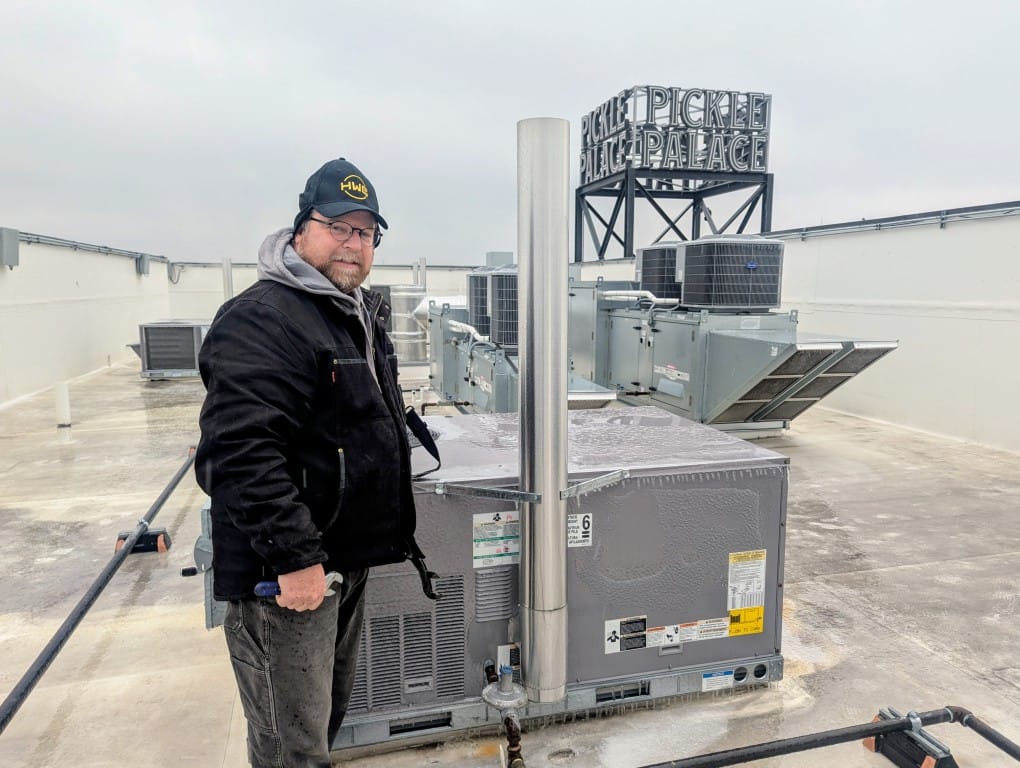
Ownership Said No. Again. Here’s Why.
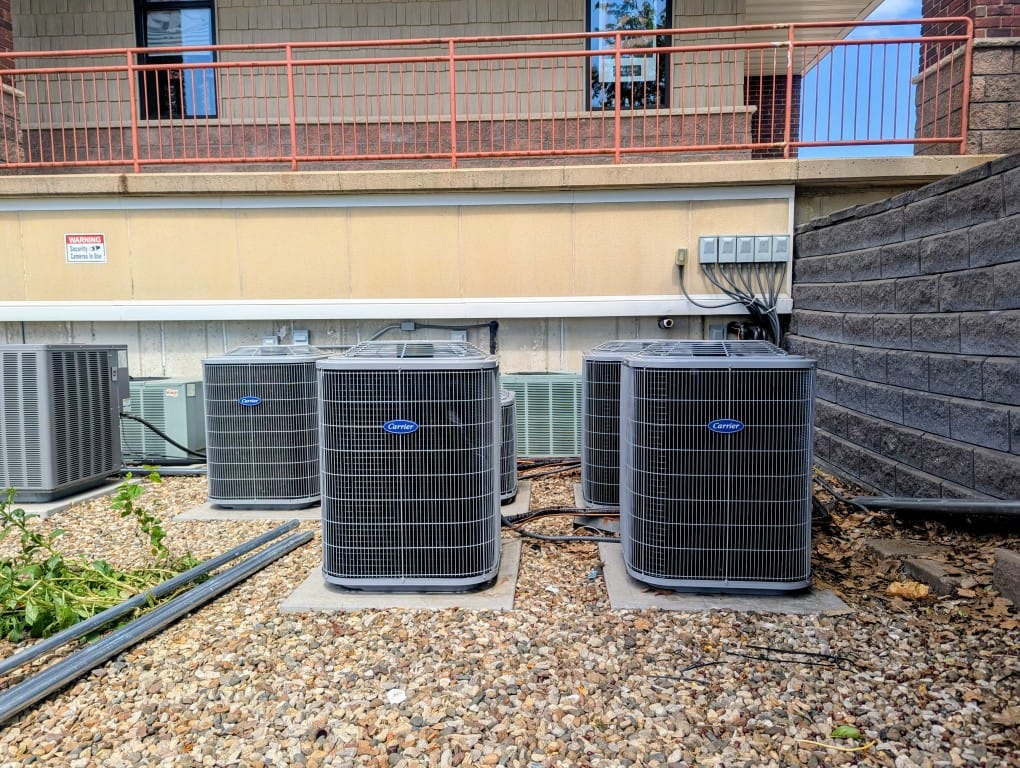 You asked for $60,000 to replace two rooftop units. Ownership asked what proof you had. You pulled up three years of service tickets that all said the same thing: “unit serviced, checked charge, cleaned coil.”
Request denied.
Look, that stings. And it isn’t fair, because you weren’t wrong about the units. You just couldn’t prove it. Service tickets record activity. Ownership funds evidence. Those are two completely different things, and nobody tells you that until you’re standing in a budget meeting getting picked apart.
Here’s the good news. You don’t need a comprehensive compliance audit to fix this. You need a maintenance record built the right way, and you can start one on your next scheduled visit without spending a dollar extra.
This article shows you what a defensible record actually contains, how to build three years of usable history in about 90 days, and how to turn it into an air conditioner replacement request that gets approved the first time.
Why “Unit Serviced” Never Wins an Argument
Think about what ownership hears when you say a unit is failing.
They hear an opinion. And they’re comparing it to every other department’s opinion about what’s urgent this year. Opinions lose to spreadsheets every single time.
Now think about what a checklist-style service report actually proves. It proves somebody showed up. It doesn’t prove the unit is declining, doesn’t show how fast, and gives ownership nothing to compare against.
But here’s what matters. The moment your record contains the same measured numbers taken at the same points over multiple visits, you stop making a claim and start showing a trend. A trend is not an opinion. A trend is a line going the wrong direction, and it’s very hard to argue with.
That’s the whole shift. Same measurements, same spots, every visit, written down.
The Five Readings That Turn a Ticket Into Evidence
Ask your service contractor for these on every visit. Most techs already take three of them and just don’t write them on your copy.
Total external static pressure comes first, and it’s the one nobody gives you. Static pressure measures how hard the blower fights to push air through your ducts. Design is usually near 0.5 inches of water column. A climbing number means the air path is choking, and that kills compressors early.
Temperature split is second. Air going in versus air coming out, with a healthy system dropping about 16 to 22 degrees. When that number shrinks year over year, something is genuinely getting worse.
Compressor amp draw against the rated load amps on the data plate is third. A compressor creeping toward its rated number is working itself to death.
Fourth, refrigerant type and charge condition, because this one now carries budget weight all on its own. Fifth, the manufacturer’s date code off the data plate — not the install date in your file, which is often wrong.
Five numbers. They add maybe ten minutes to a visit you’re already paying for.
Novak Heating and Cooling has been working on this region’s mechanical systems since 1934, and the pattern is consistent: rooftop failures announce themselves years ahead. The signals just never make it onto paper where anyone can use them.
The 90-Day Catch-Up Plan
You might feel like you’re already too far behind for this to help. You’re not.
You can build a usable baseline faster than you think, because a record doesn’t need to be long to be persuasive. It needs to be consistent and it needs at least three data points per unit.
| Days | What you do | Effort | What you walk away with |
| 1–30 | Baseline every unit — five readings, photo of the data plate, note the tenant it serves | ~20 min per unit | A complete starting inventory, no gaps |
| 31–60 | Re-read the worst-scoring units and add coil, economizer, and curb condition notes | 1 hour per flagged unit | A short list with depth behind it |
| 61–90 | Third reading on flagged units, then chart each number across all three visits | Half a day total | Trend lines showing direction and speed |
Three points on a chart is enough to show a direction. That’s all ownership needs to see.
And the exception worth naming: if a unit is already failing this summer, skip the record and replace it. This process is for planning, not for emergencies.
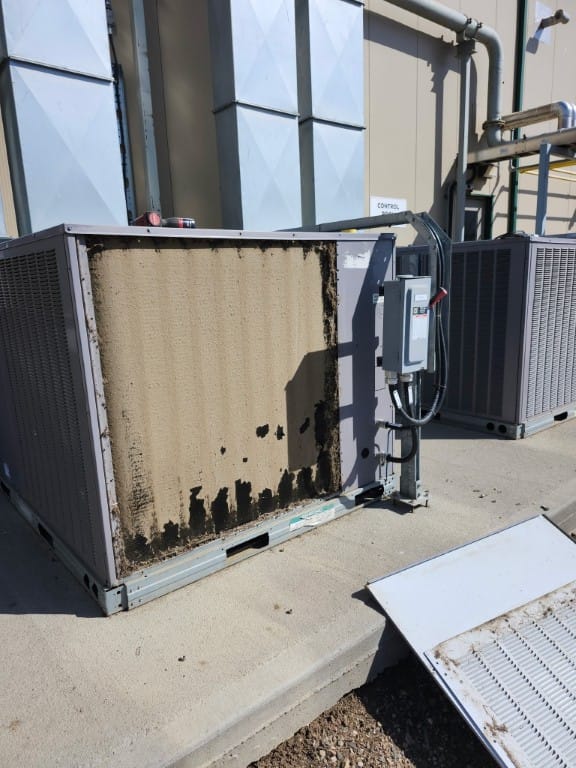
Match the Record to How the Money Gets Decided
Not every unit deserves the same paperwork. Match your effort to what a failure would actually cost the building.
| Record depth | Which units get it | What’s in the file | Where it goes |
| Baseline file | Every unit you manage | Five readings, date code, tenant served | Annual operating review |
| Trended file | Units serving critical tenants or scoring poorly | Baseline plus three visits charted, repair spend to date | Next-year capital request |
| Replacement file | Units you’re funding this cycle | Trended file plus airflow measurements, load calc, duct and electrical notes | The actual capital ask |
See what that does? The expensive documentation only happens on the handful of units where real money moves. Everything else gets twenty minutes a year.
Most managers do this backwards. They try to audit everything at full depth, run out of time by unit four, and end up with nothing they can use.
The Number That Changes the Whole Argument
Here’s something worth understanding, because it reframes how you write the request.
When a rooftop unit can’t hold a suite at setpoint, most contractors quote a bigger unit. Often that’s the wrong fix. If static pressure is running high, the problem lives in the ductwork — undersized returns, crushed runs, leaks into unconditioned space — and a bigger blower fighting the same resistance just fails faster.
That means you buy the same tenant complaint twice.
This is where Novak Heating and Cooling looks different from most contractors in the corridor. The company is a sheet metal contractor first. Owner Randy Novak won SMACNA’s national Contractor of the Year award in 2021 and served as the sheet metal association’s national president, and there’s an in-house fabrication shop in Hiawatha. SMACNA is the trade body for ductwork — the air path, not the box.
Why does that matter for your budget request? Because a documented static pressure problem converts a vague “the unit is old” ask into a specific, priced scope. Ownership funds scopes. They stall on feelings.
Cooling is a delivery problem. Your record should measure delivery.
Refrigerant: The Line Item That Just Got More Expensive
Put this in every file, because it’s moving numbers right now.
R-410A production ended in January 2025. New equipment ships with R-454B or R-32. Service refrigerant for existing systems is on a phase-down, and repair costs on anything installed roughly between 2010 and 2024 are climbing because of it.
For your capital request, that’s genuinely useful. A repair estimate on an R-410A unit isn’t a fixed number anymore — it’s a number on an upward curve. Documenting refrigerant type per unit lets you show ownership that deferring replacement costs more each year you defer it.
The exception: a clean unit with low run hours and no airflow problems is still worth repairing. Note that in the file too. Recommending a repair sometimes is exactly what makes your replacement recommendations credible the rest of the time.
Writing the Request So It Survives the Room
Two pages. That’s it.
Page one is the sorted list — every unit, condition score, age, and the tenant it serves. Page two is the three worst units, each with its trend chart, its repair spend to date, and a quoted replacement scope that includes duct work if the numbers call for it.
Then one sentence at the top: here is what we spent reacting last year, and here is what planning costs instead.
Emergency replacement costs more, happens on the vendor’s schedule instead of yours, and burns tenant goodwill you spent years earning. When you can show that in dollars next to a planned shoulder-season number, the conversation changes from whether to when.
A structured maintenance agreement is what makes the readings consistent instead of dependent on which tech happens to show up. That consistency is the whole asset.
Frequently Asked Questions
How much maintenance history do I actually need to justify a replacement?
Three visits with the same measured readings per unit is usually enough, which most portfolios can build inside one cooling season. Two years is stronger. What matters more than length is consistency — five identical measurements taken at the same test points beat five years of varied checklists, because only consistent readings produce a trend line. Add repair spend per unit and you have both the condition case and the cost case in one file.
What should I require in a commercial service report?
Ask for numbers, not adjectives. Static pressure, temperature split, compressor amp draw against rated load, refrigerant type and charge, plus date code on the first visit. Have the tech note the test points used so the next visit matches. Reports saying “operational” or “cleaned coil” describe activity and are worthless in a capital meeting. Put the measurement requirement in your service agreement so it isn’t a request you repeat every visit.
Can I document ductwork condition without a full engineering assessment?
Yes, and this is the highest-value shortcut available. Total external static pressure is a single reading that tells you whether the air path is restricted, and it takes a technician about five minutes with a manometer. If it’s running above roughly 0.8 inches of water column, flag the unit for a focused duct assessment rather than a full building study. That one number tells you which few units justify deeper investigation.
Does documented maintenance history really affect replacement cost?
It affects scope accuracy, which is where budgets actually break. A commercial installation quoted from measured data prices the real work — curb adapter, electrical capacity, duct modifications — up front, instead of surfacing it as a change order mid-project. Documented history also strengthens warranty claims, since manufacturers routinely ask for maintenance records when a compressor fails inside the warranty period.
Your Record Is the Budget Request
Stop thinking of maintenance documentation as paperwork you owe someone. It’s the argument itself.
Five readings per unit, taken the same way every visit, charted across three visits. That’s a defensible replacement plan, and it takes a fraction of the time and money a comprehensive compliance audit would — the audit you were never getting funded anyway.
The single thing worth insisting on: whoever services your equipment should measure the air path, not just the box. A quote that ignores the ductwork is a quote for the same tenant complaint next July.
Novak Heating and Cooling has fabricated and installed this region’s ductwork since 1934, and the shop is still right here in Hiawatha. If you want measured condition data in your files before the next budget cycle closes, schedule commercial service and ask for the numbers on your copy of the report.
Start with one unit this week. By spring, you’ll walk into that meeting with a chart instead of a hunch — and this time, you’ll get the yes.