 Your HVAC air filter protects both your equipment and your indoor air. It traps dust and debris before they reach key components inside your furnace and air conditioner. When the filter is clogged or incorrect, airflow drops and the system works harder than it should. That strain affects comfort, efficiency, and long term reliability.
Many homeowners in Cedar Rapids are unsure which filter to choose or how often to replace it. The options can be confusing, and higher cost does not always mean better performance. Novak Heating & Cooling has served the Cedar Rapids area since 1934, helping homeowners make informed decisions about their systems. In this guide, you will learn which filter works best for your system, how often to replace your filter, and simple steps to protect your HVAC system and indoor air.
Why Your HVAC Air Filter Matters More Than You Think
Your air filter shields critical parts inside your HVAC system. It prevents dust from collecting on the blower motor, heat exchanger, and evaporator coil. Clean airflow allows the system to operate within its designed limits. When airflow is restricted, components experience added stress.
A clogged filter can increase energy use and shorten equipment life. Restricted airflow may cause frozen coils in summer or overheating in winter. Poor filtration can also worsen indoor air quality, especially during Iowa’s heavy pollen seasons and dusty conditions. Regular filter checks help protect your system and maintain cleaner air inside your home.
Understanding the Main Types of HVAC Air Filters
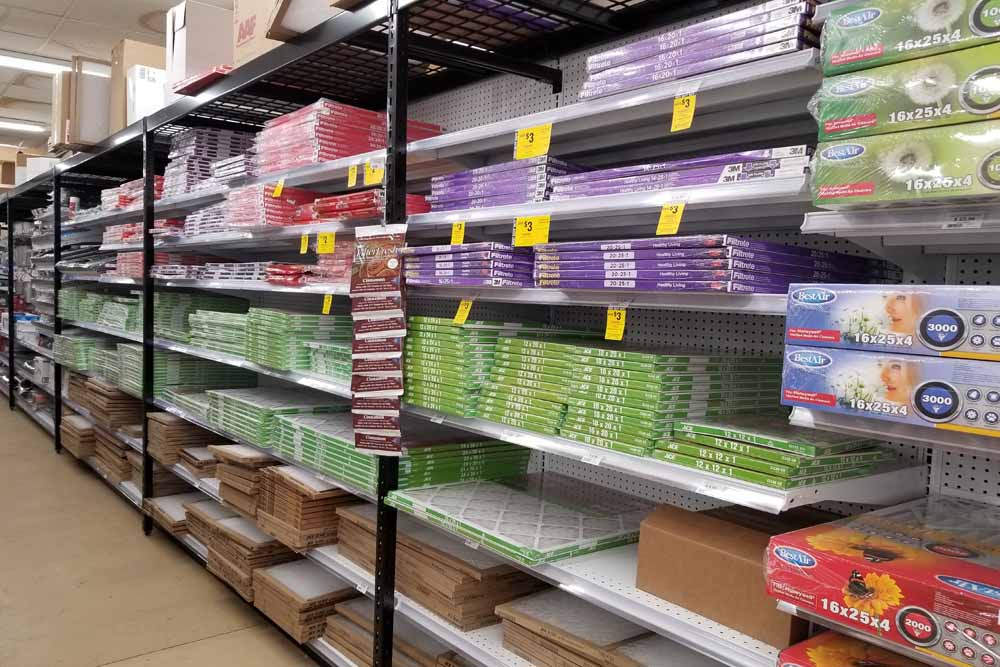
HVAC filters are not one size fits all. Different materials and designs affect how well particles are captured and how easily air moves through the system. Choosing the correct type depends on your equipment specifications and indoor air quality needs.
1. Fiberglass (Flat Panel) Filters
Fiberglass filters are basic disposable filters made of layered fiberglass fibers. They are designed primarily to protect HVAC equipment from large debris rather than improve indoor air quality. These filters typically carry lower MERV ratings, often between 1 and 4.
Key characteristics:
- Basic filtration for larger particles such as dust and lint
- Lower cost compared to pleated or high efficiency options
- Minimal airflow resistance due to simple construction
- Limited ability to capture smaller particles like pollen
Because they have less surface area and lower particle capture efficiency, fiberglass filters usually require replacement about every 30 days. They are most appropriate when the primary goal is protecting the equipment and when the system manufacturer specifies low resistance filtration.
2. Pleated Filters
Pleated filters are made from polyester or cotton paper folded into pleats. The pleated design increases surface area, which allows the filter to capture more particles without blocking airflow as quickly. Most residential pleated filters fall within the MERV 5 to 13 range.
Common features:
- Larger surface area compared to flat fiberglass filters
- Better capture of dust, pollen, mold spores, and pet dander
- Widely used in residential HVAC systems
- Available in different thicknesses such as 1 inch and 4 to 5 inch media filters
Pleated filters offer a practical balance between filtration efficiency and airflow when matched correctly to the system. Replacement intervals often range from 60 to 90 days for 1 inch versions, though conditions inside the home can shorten that timeframe.
3. High-Efficiency Filters (High-MERV and HEPA-Compatible Systems)
High efficiency filters are designed to capture smaller airborne particles. Filters with MERV ratings between 13 and 16 can capture finer particulates, including smaller allergens and some bacteria. True HEPA filters are capable of capturing 99.97 percent of particles at 0.3 microns, but they are typically used in systems specifically designed to handle their airflow resistance.
Important considerations:
- Designed for finer particle capture
- Often selected for households with allergy or asthma concerns
- Higher MERV ratings increase filtration but can restrict airflow
- Not all residential systems are designed to support HEPA filtration
Using a high-MERV filter in a system that is not rated for it can increase static pressure and reduce airflow. HVAC manufacturers and industry organizations recommend confirming system compatibility before installing high efficiency filters. A professional evaluation helps ensure filtration improvements do not compromise equipment performance.
4. Washable and Reusable Filters
Washable filters are designed to be cleaned and reinstalled rather than discarded. They are often constructed from metal or durable synthetic materials. Maintenance requirements are higher because cleaning must be done thoroughly and regularly.
 Key points to understand:
- Must be cleaned on a regular schedule, often monthly
- Initial cost is higher than disposable filters
- Long-term cost may be lower if maintained properly
- Filtration efficiency varies by design and manufacturer
Reusable filters can make sense for homeowners willing to maintain them consistently. If cleaning is delayed or incomplete, airflow and filtration performance can decline. Always follow manufacturer instructions for cleaning and drying before reinstalling the filter.
What MERV Ratings Measure
MERV ratings measure a filter’s ability to capture airborne particles between 0.3 and 10 microns in size. This includes dust, pollen, mold spores, pet dander, and in higher ranges, finer particles like smoke. The rating reflects how efficiently the filter captures particles across different size ranges.
The MERV scale ranges from 1 to 16 for most residential and commercial systems.
- MERV 1–4: Captures large particles such as lint and dust.
- MERV 5–8: Captures mold spores and pollen.
- MERV 9–12: Captures finer dust and pet dander.
- MERV 13–16: Captures very fine particles, including smoke and some bacteria.
Recommended MERV Ratings for Most Homes
For most residential HVAC systems, filters rated MERV 8 or lower provide the best balance between effective filtration and proper airflow. These filters capture common household particles like dust, lint, and pollen without placing unnecessary strain on your system.
Using higher-rated filters can restrict airflow, which may reduce efficiency, increase wear on components, and potentially lead to comfort or performance issues. For this reason, many manufacturers recommend staying at MERV 8 or below for standard residential equipment unless otherwise specified by a professional.
How Often Should You Replace Your HVAC Filter?
Filter replacement timing depends on thickness, material, and how much your system runs. National energy and HVAC organizations recommend checking filters monthly and replacing them before heavy buildup restricts air movement. A consistent schedule helps maintain steady airflow and system stability.
Replacement frequency should follow manufacturer guidance, but general residential standards provide a reliable starting point.
Standard Replacement Guidelines by Filter Type
Different filter designs hold debris at different rates. Thicker filters usually last longer because they have more surface area to collect particles.
- 1-inch filters: Replace every 30 to 60 days under normal household conditions.
- Pleated 1-inch filters: Replace approximately every 60 to 90 days.
- 4–5 inch media filters: May last up to 6 months depending on usage.
- High-efficiency systems: Follow the equipment manufacturer’s specified interval.
Even when a filter is rated for longer use, inspection is still recommended to confirm condition.
Factors That Require More Frequent Changes
 Certain household conditions increase the amount of airborne particles passing through the system. More particles mean the filter fills faster.
- Homes with pets that shed hair and dander
- Occupants with allergies or asthma
- Smoking indoors
- Home renovation projects that generate dust
- Extended heating in winter or cooling in summer across Iowa
When system runtime increases, so does the volume of air passing through the filter.
Signs Your Filter Needs Replacement Sooner
Replacement should be based on condition, not just the calendar. A filter can reach capacity earlier than expected depending on indoor air conditions.
Common indicators include:
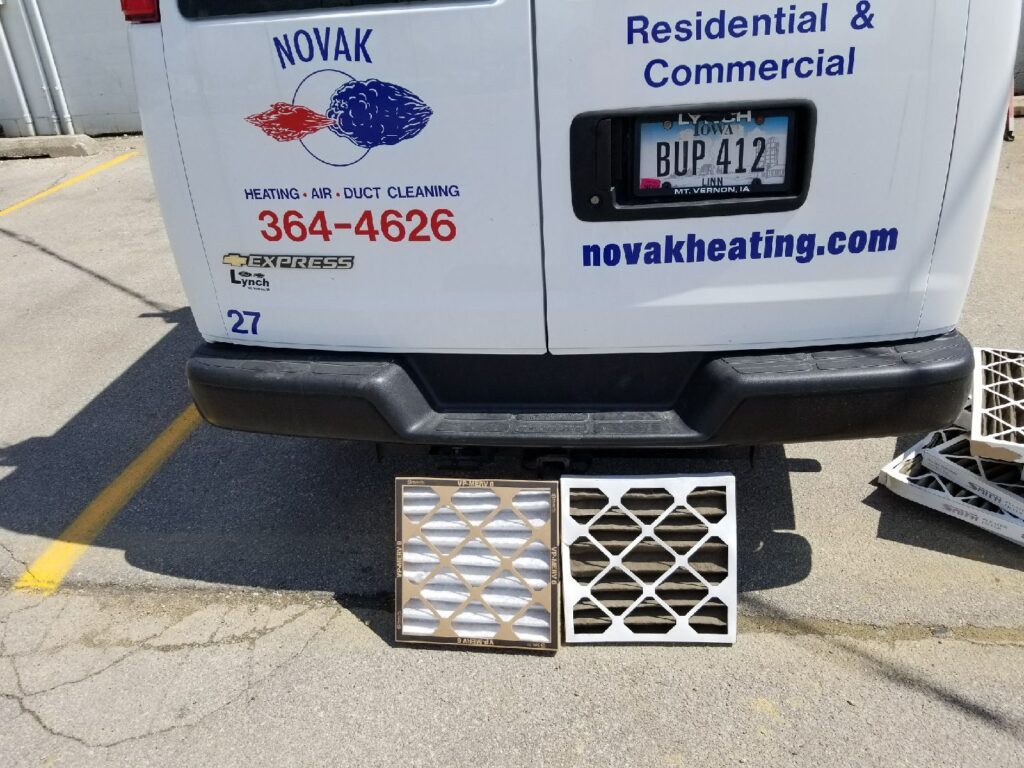
- Visible dust buildup or dark discoloration
- Reduced airflow at supply vents
- Higher energy bills without other changes
- More dust collecting indoors on surfaces
If these signs appear, replacing the filter can help restore proper airflow and system performance.
Can the Wrong Filter Damage Your HVAC System?
Using the wrong filter can affect how your system operates. HVAC equipment is designed for specific airflow ranges. When a filter is too restrictive, airflow drops below design levels.
Airflow restriction can lead to:
- Increased static pressure inside the duct system
- Blower motor strain from working harder to move air
- Reduced system efficiency
In cooling mode, restricted airflow may cause frozen evaporator coils because the coil does not receive enough warm air. In heating mode, low airflow can contribute to overheating furnace components, which may trigger safety limits.
To avoid these issues, always match:
- The exact filter dimensions listed for your unit
- A MERV rating approved by the equipment manufacturer
Correct sizing and rating protect both performance and equipment life.
How to Check and Replace Your HVAC Filter Properly
Replacing a filter is straightforward, but it must be done correctly. Most residential filters are located inside the return duct, behind a return grille, or inside the furnace cabinet.
Step 1: Locate the filter compartment.
Consult your system manual if needed.
Step 2: Confirm the correct size.
Check the dimensions printed on the filter frame and replace with the same size.
Step 3: Install with the airflow arrow facing the correct direction.
The arrow should point toward the blower or into the furnace.
Step 4: Dispose of the old filter properly.
Seal it in a bag before placing it in the trash to limit dust release.
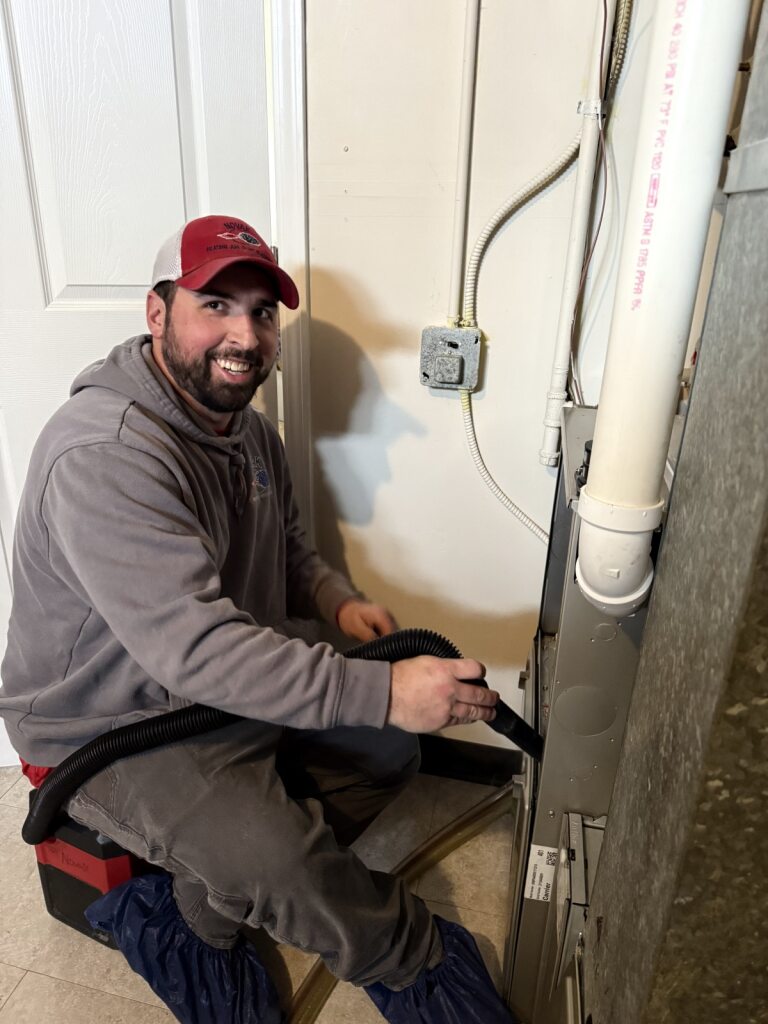
During maintenance visits, Novak Heating & Cooling inspects filters for condition, fit, and compatibility. This ensures the system operates within manufacturer guidelines.
Should You Upgrade Your Filter for Better Air Quality?
Upgrading may help when finer particle capture is needed. Households with persistent dust concerns or respiratory sensitivities sometimes benefit from higher MERV filters, if the system allows it.
However, filtration is only one part of indoor air quality control. In some homes, additional solutions may be more effective, such as:
- Whole-home air purifiers
- Media air cleaners
- Humidity control systems
Novak Heating & Cooling evaluates airflow capacity and system design before recommending upgrades. The goal is improved indoor comfort without increasing strain on HVAC equipment.
Frequently Asked Questions
What type of air filter is best for most homes?
Most homes do well with a properly sized pleated filter in the MERV 8 to 11 range. Novak Heating & Cooling technicians can verify the correct size and rating for your specific system.
How often should I change a 1-inch furnace filter?
A 1-inch filter should typically be replaced every 30 to 60 days, depending on usage and indoor conditions.
What happens if I don’t change my air filter?
A dirty filter can reduce efficiency, increase energy bills, and place extra strain on system components. Over time, this may lead to avoidable repairs.
Can Novak Heating & Cooling help me choose the right filter?
Yes. Novak Heating & Cooling serves Cedar Rapids, Marion, Hiawatha, and surrounding communities, and can inspect your system to recommend the correct filter and maintenance schedule.
The Right Filter Makes a Bigger Difference Than You Think
For most homes, a properly sized pleated filter in the MERV 8 or lower range delivers effective filtration without restricting airflow. Replacement timing should reflect system use and indoor conditions, especially during Iowa’s heavy heating and cooling months. A quick monthly inspection can prevent airflow problems and reduce unnecessary strain on equipment.
Staying consistent with filter maintenance helps avoid breakdowns and unexpected repair costs. Novak Heating & Cooling has served Cedar Rapids and surrounding communities since 1934, offering maintenance plans and system evaluations to keep HVAC systems operating safely. If you would like help selecting the right filter for your home, call Novak Heating & Cooling at (319) 364-4626 and schedule a system check today!